 Home Care
 in Saint Paul, MN
Free, friendly help finding licensed non-medical care here in Ramsey County. Tell us what your family needs and we will connect you with one trusted local agency, no cost and no obligation.
Takes about 60 seconds. One local agency reaches out, not a call center.
Finding Home Care in Saint Paul, MN
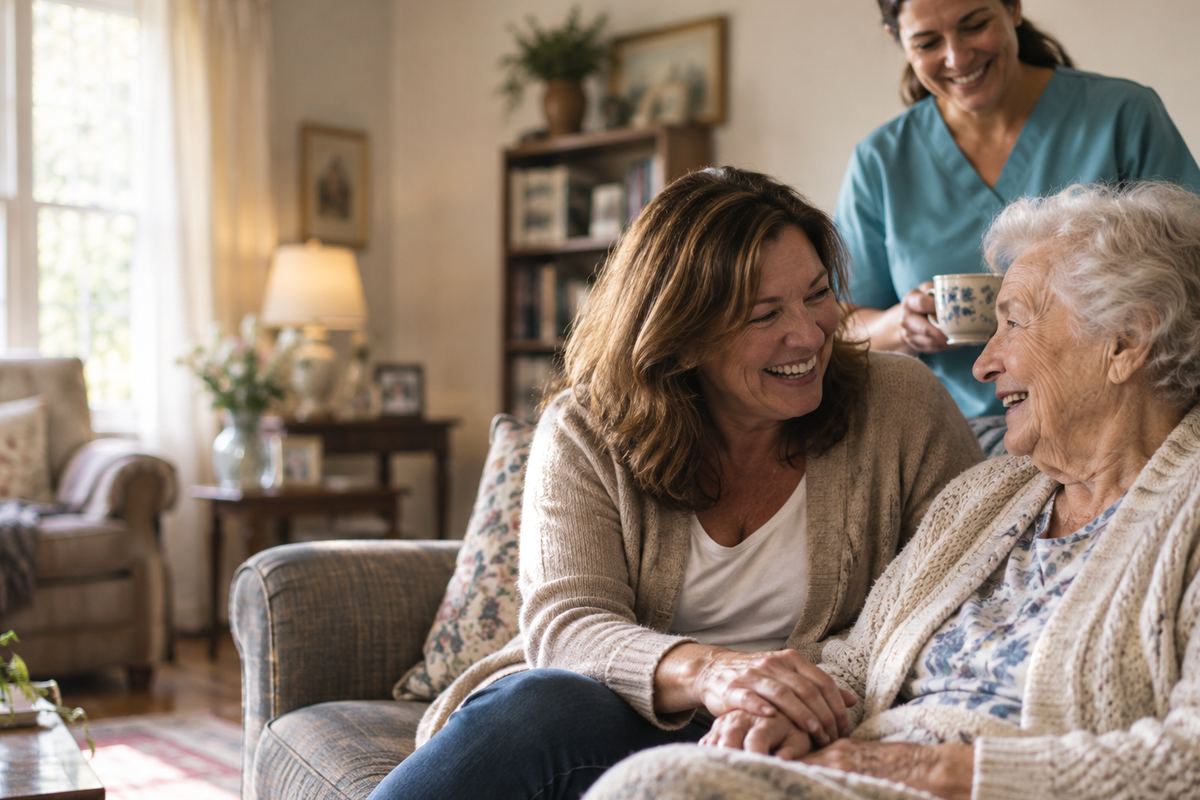
If you are searching for home care for a parent or spouse, you are probably juggling a lot right now. Maybe a recent fall, a tough diagnosis, or just the slow realization that mom or dad needs more help than you can give while working and raising your own family.
This community is home to a large and growing population of older adults, and the good news is that there are many licensed options throughout the area and across Ramsey County. The hard part is knowing which provider fits your family's needs, budget, and schedule.
That is exactly where Home Care Helper comes in. We are a free matching service, not an agency ourselves. We listen to what your family needs, then connect you with one licensed local provider that serves your part of the city.
We built this service because we know how overwhelming it can be to start from scratch. Instead of calling a dozen numbers off the internet and hoping someone calls back, you answer a few simple questions and we do the legwork of finding a provider that actually fits. There is no cost to you, no sales pitch, and no obligation to move forward if the timing is not right.
Whether your loved one lives downtown, near the river, or out toward the edges of Ramsey County, the goal is the same: a trustworthy caregiver relationship that lets your family focus on each other instead of logistics.
Minnesota winters and the pace of daily life can make it especially hard for adult children to handle everything alone, particularly when they live out of town. Having one reliable point of contact, rather than a dozen open tabs of agency websites, makes a stressful search for home care feel manageable again.
Local families also benefit from a tight-knit network of community resources, senior centers, and faith organizations that often work alongside licensed agencies. Tapping into that broader support system, while leaning on one dependable caregiver relationship, tends to produce the best outcomes for aging parents who want to remain independent.

Home Care Services Available in Saint Paul
Non-medical support covers a wide range of help, from a few hours of companionship each week to around the clock assistance at home. Licensed providers serving this area and the surrounding Ramsey County region typically offer the following types of care.
Every family's situation looks a little different, so it helps to think of these as starting points rather than rigid categories. Many households blend two or three types of support as needs change over time, and a good agency will adjust the care plan as circumstances shift.
Below is a closer look at each type of support, along with a sense of when local families typically reach for it.
Companion Care
Companion care focuses on friendship, conversation, and reducing isolation. A caregiver might share a meal, play cards, go for a walk, or simply be present so your loved one is not alone all day. This is often the first step families take when a parent starts needing a little extra support, long before more hands-on help becomes necessary. It is also a gentle way to introduce outside help without it feeling like a major life change.
Personal Care
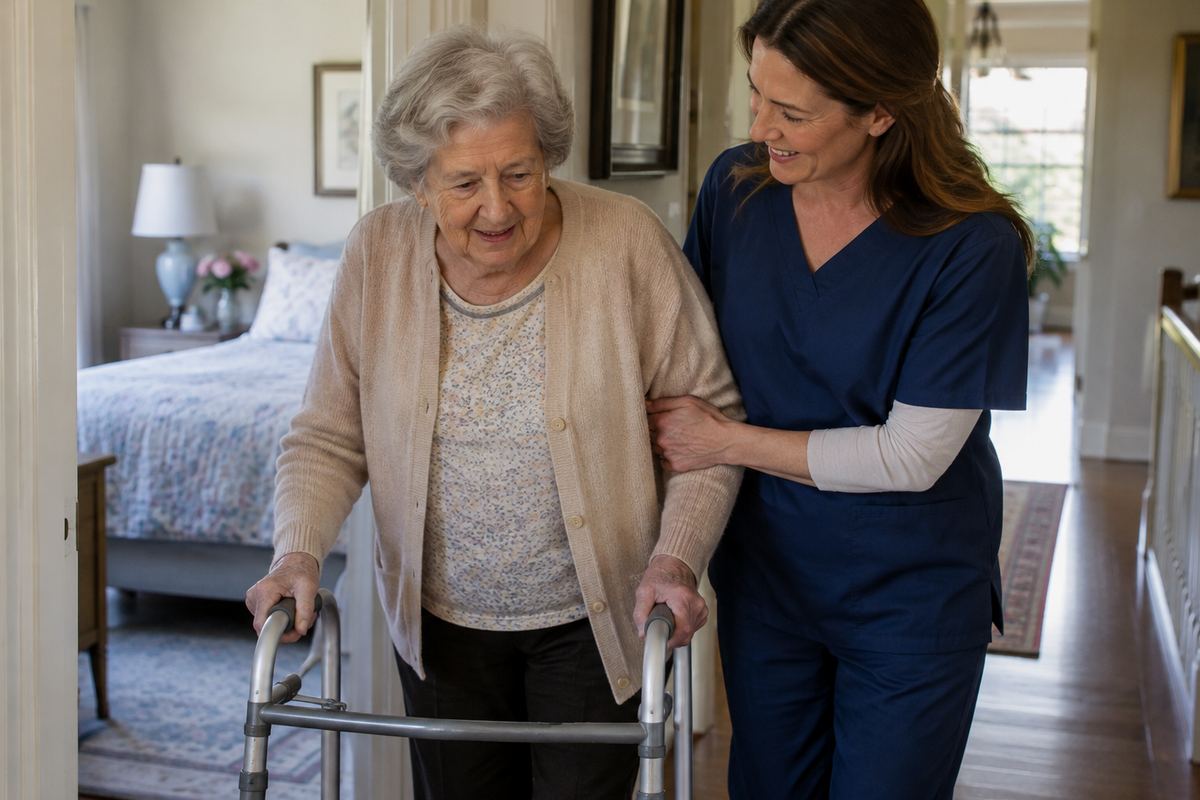
Personal care includes hands-on help with bathing, dressing, grooming, toileting, and mobility. It is a good fit when daily tasks have become physically difficult or unsafe to do alone, and it is one of the most requested services among families here searching for senior support. Caregivers trained in personal care also watch for small changes in health or mood that families might otherwise miss.
Alzheimer's and Dementia Care
Caregivers trained in dementia support understand how to help someone with memory loss while keeping them calm, safe, and engaged. This type of elderly care often includes help with routines, gentle redirection, and support for family members who need a break from near-constant supervision. Consistency matters a great deal here, so many agencies try to keep the same caregiver assigned over time.
Respite Care
Respite care gives family caregivers a chance to rest, travel, or simply recharge, knowing a trained professional is covering things at home. It can be arranged for a single afternoon, a weekend, or longer stretches when a primary caregiver needs time away. Many spouses and adult children wait far too long to ask for this kind of break, so even a few hours a week can make a real difference.
24-Hour and Live-In Care
For families whose loved one needs supervision around the clock, licensed providers can arrange 24-hour coverage with rotating caregivers or a live-in arrangement. This level of support is common after a serious health decline or advancing dementia, when leaving someone alone is no longer safe. Families often move into this level gradually, starting with overnight help before adding full daytime coverage.
Post-Hospital Care
After a hospital stay or surgery, many older adults in the area need extra help at home during recovery. Post-hospital support can include medication reminders, mobility assistance, light housekeeping, and transportation to follow-up appointments, easing the transition back to daily life. This kind of short-term care can also lower the chance of a return hospital visit by catching small problems early.
What Does Home Care Cost in Saint Paul?
Families here typically pay roughly $36 to $46 per hour for non-medical support. The exact rate depends on the number of hours needed, the level of care required, and whether overnight or live-in coverage is involved.
With a median household income of $92,515 in the area, many families are able to plan for private-pay support, though it remains a significant expense for most households. Getting a clear quote from a licensed provider, based on your specific situation, is the best way to understand true costs.
Rates can also shift depending on whether you need a caregiver for just a few mornings a week or for full-time coverage. Agencies often offer tiered pricing, so asking about minimum hours, holiday rates, and any additional fees upfront can help you budget accurately.
Because Home Care Helper connects you with just one provider suited to your needs, you can ask detailed questions about pricing and care plans without having to sort through a pile of competing sales calls.
It is also reasonable to ask whether rates differ for companion care versus personal care, since hands-on support sometimes carries a slightly higher hourly rate than companionship alone. A transparent agency should be able to walk you through these details clearly before you commit to anything.
Some families find it helpful to compare quotes from a couple of visits before settling on a schedule, since an initial estimate may change once an agency assesses mobility, memory, and daily routines in person.

Paying for Home Care in Saint Paul
Most families pay privately, using savings, retirement income, or help from adult children. This is the most common path for non-medical, private-pay support here and throughout Ramsey County.
Long-term care insurance policies often reimburse for services provided by a licensed agency, so it is worth reviewing your loved one's policy closely or asking the provider for help understanding the paperwork. Some policies require specific documentation or waiting periods, so starting this conversation early can save time later.
Veterans and surviving spouses may qualify for the VA Aid and Attendance pension, which can be applied toward the cost of in-home caregivers. A licensed agency can often point you toward resources to help with the application process, since the paperwork can be confusing on your own.
It is important to know that Medicare does not cover ongoing non-medical, custodial support. Medicare may cover short-term skilled nursing or therapy in some situations, but it will not pay for day-to-day companion or personal assistance over the long run. Planning around this reality early tends to reduce stress later.
Some families also combine resources, using a portion of savings alongside a long-term care policy or veterans benefit to stretch a budget further. A licensed provider can often help you think through which combination makes sense for your household.
Whatever combination you choose, it helps to put the plan in writing and revisit it every few months, since care needs and costs in this area tend to change as a loved one ages.

How to Choose a Licensed Agency in Saint Paul
In Minnesota, providers must be licensed by the Minnesota Department of Health, known as MDH. Agencies hold either a basic license, which covers non-medical help like bathing, dressing, and companionship, or a comprehensive license, which adds nursing-level services.
Before hiring any provider, it is worth verifying their license status directly on the MDH website. This simple step confirms the agency is operating legally and meets the state's standards for training and oversight.
Beyond licensing, ask how caregivers are screened and trained, how the agency handles scheduling changes or callouts, and how they build a plan around your loved one's routine. A good agency will take time to understand your family's needs rather than rushing you into a contract.
It also helps to ask about communication. Will you get updates after each visit? Is there a supervisor you can call with concerns? These details often matter more day to day than the glossy brochure, and they tell you a lot about how a provider actually operates once the contract is signed.
The Area Agency on Aging for the Twin Cities metro, Trellis, along with the free Senior LinkAge Line at 1-800-333-2433, can also help families compare options and understand benefits. These are useful, unbiased starting points if you want a second opinion alongside your search.
Finally, trust your instincts during the first conversation with any provider. If they seem rushed, vague about pricing, or unwilling to answer questions about licensing and training, that is worth noting before you sign anything.
A short trial period can also be a smart way to confirm fit before committing to a long-term schedule, especially for families new to arranging home care for the first time.

How Home Care Helper Matching Works
Home Care Helper is a free service built for families, not an agency itself. We do not employ caregivers. Our only job is to listen and connect.
When you reach out, we ask a few simple questions: where your loved one lives, what kind of help they need, and when support should begin. Based on your answers, we match you with one licensed local provider that fits your situation.
That agency will follow up directly to discuss a plan, pricing, and next steps. There is no obligation, no spam, and no list of providers to sort through on your own. Just one trusted introduction, so you can spend your time with family instead of making endless phone calls.
We know how exhausting it can feel to research options while also managing work, kids, and the emotional weight of watching a parent age. Our goal is to shorten that search from weeks to minutes, so you can start getting help sooner rather than later.
Because we are not an agency, we have no incentive to push you toward a particular provider. We simply try to match your family's needs and location with a licensed caregiver who can realistically help, and then we step out of the way.
This approach works well for families here because it removes the guesswork. Instead of researching every agency in Ramsey County on your own, you get a single, relevant introduction based on your actual situation.
Why Families Choose Care at Home
Most older adults want to stay in their own home for as long as possible, surrounded by familiar rooms, neighbors, and routines. In-home support makes that possible by bringing help directly into the house rather than moving a loved one into a facility.
For many local families, staying at home also means fewer disruptions. A parent can keep their own schedule, their own bed, and their own neighborhood, while still getting assistance with daily tasks.
Caregivers can also act as an extra set of eyes for families who live out of state or simply cannot be present every day. Knowing someone trustworthy is checking in brings real peace of mind, especially during the early weeks after a diagnosis or hospital stay.
There is also a financial and emotional flexibility to consider. Starting with a few hours a week of companion support costs less and feels less disruptive than a big, permanent decision, and it gives everyone time to adjust as needs change. Many families find that starting small builds trust and makes bigger conversations easier down the road.
Choosing in-home support instead of a facility also tends to keep extended family more involved. Grandchildren can still visit the same house, neighbors can still stop by, and holidays do not have to change just because extra help is now part of daily life. For many households here, that continuity matters just as much as the practical help itself.
Over time, this steady, familiar routine often helps older adults stay more engaged and comfortable than a sudden move away from the home and community they know. For families weighing their options locally, that sense of continuity is often the deciding factor.
Home Care Near Saint Paul, MN
Home Care Helper connects families throughout Saint Paul, including neighborhoods such as Downtown, Summit Hill, Highland Park, Como Park, Payne-Phalen, and the West Side, as well as the surrounding Ramsey County area. We also match families in nearby Minneapolis, Hopkins, Minnetonka, and Eden Prairie. Coverage includes ZIP codes 55101, 55102, 55103, 55104, 55105, 55108, 55111, 55112, 55113, 55114, 55116, 55117, 55126, 55127, 55130, and 55155. Wherever you are located in the greater Twin Cities area, we can likely connect you with a provider nearby offering dependable home care close to home.
Saint Paul ZIP codes we cover
Nearby home care pages
Saint Paul Home Care FAQs
How much does home care cost in Saint Paul, MN?
Non-medical support in this area typically costs roughly $36 to $46 per hour. The final rate depends on how many hours are needed, the type of support required, and whether overnight or live-in coverage is involved. A licensed local provider can give you an exact quote based on your family's needs.
Is home care in Saint Paul licensed by the state?
Yes. Minnesota requires providers to hold a license from the Minnesota Department of Health, either a basic license for non-medical help or a comprehensive license that adds nursing-level services. You can verify any agency's license status on the MDH website before signing an agreement.
Does Medicare pay for home care in Saint Paul?
Medicare does not cover ongoing non-medical, custodial support such as companion care or help with bathing and dressing. It may cover short-term skilled nursing or therapy in specific situations, but families typically pay privately or use other resources for day-to-day assistance.
Can veterans get help paying for home care?
Veterans and surviving spouses may qualify for the VA Aid and Attendance pension, which can help cover the cost of in-home caregivers. A licensed agency can often help explain how this benefit works and what documentation is needed.
What is the difference between companion care and personal care?
Companion care focuses on friendship, conversation, and help with light tasks like meals or errands. Personal care includes hands-on assistance with bathing, dressing, grooming, and mobility. Many families start with companion support and add personal care as needs increase.
How does Home Care Helper work?
Home Care Helper is a free matching service for families in and around Ramsey County. We ask about your loved one's needs and location, then connect you with one licensed local provider suited to your situation. We do not employ caregivers or charge families any fee.
What areas around Saint Paul do you cover?
We match families throughout the city and Ramsey County, as well as nearby communities including Minneapolis, Hopkins, Minnetonka, and Eden Prairie. We cover ZIP codes 55101 through 55155 across the greater area.
Where can I get unbiased help comparing options?
Trellis, the Area Agency on Aging for the Twin Cities metro, and the free Senior LinkAge Line at 1-800-333-2433 can help families compare options and understand available benefits. These resources are a helpful complement to your search for a licensed provider locally.
Let Us Help You Find the Right Care in Saint Paul
Tell us a little about your loved one's needs, and we will connect you with one licensed local provider serving this area and Ramsey County, free of charge. No sales pressure, just a trusted introduction to help your family move forward with confidence.
Takes about 60 seconds. One local agency reaches out, not a call center.