 Home Care
Find Trusted Home Care in Orange, CA
Tell us what kind of in-home care your loved one needs in Orange, and we will connect your family with one licensed local agency ready to help. It costs nothing to get matched.
Takes about 60 seconds. One local agency reaches out, not a call center.
Why the Search for Dependable Care Feels So Personal for Orange Families
Orange is a city built around long memories, from Old Towne's circle to the quiet streets near Chapman University. When a parent starts needing extra help at home, families here are not just arranging a service. They are trying to protect the life their loved one built in this community.
Finding the right in-home caregiver means more than filling a schedule. It means finding someone who respects how your parent likes mornings to go, who notices small changes, and who treats your family's home with care. That is why getting this choice right locally matters so much.
Consistency Keeps Daily Life Steady
Seniors tend to do best when their routine stays familiar. A dependable caregiver who shows up at the same time each day, understands breakfast preferences, and knows the walking path around the neighborhood helps a parent feel settled rather than managed. That steadiness often matters as much as the tasks themselves for elderly care in this part of California.
The Right Fit Protects Independence
In-home care should support independence, not replace it. When a caregiver understands what your parent can still do and only steps in where needed, daily life stays closer to normal. Families who choose carefully tend to see less resistance and more cooperation from the person receiving senior care.
Local Familiarity Shapes Better Outcomes
A caregiver familiar with the area can help your parent stay connected to doctors' appointments, favorite shops near The Village, or weekly visits with friends. That local familiarity, paired with proper training, often makes support feel genuine rather than clinical for families across the county.

In-Home Care Services That Help Orange Seniors Stay Where They Belong
Care is not one-size-fits-all. Families here are usually looking for one of several service types, often depending on how much support a parent needs and how quickly those needs are changing.
Below are the most common categories of in-home care requested across Orange County. The agency we connect you with will build a plan around your specific situation rather than a generic package.
Friendly Companionship to Ease Lonely Hours
Companion care focuses on conversation, hobbies, and reducing loneliness. For a senior living alone, a companion caregiver might share a meal, take a walk near Hart Park, or simply be present during the quieter hours of the day. This type of support often prevents the isolation that can creep in as social circles shrink with age.
Hands-On Help With Bathing, Dressing, and Getting Around
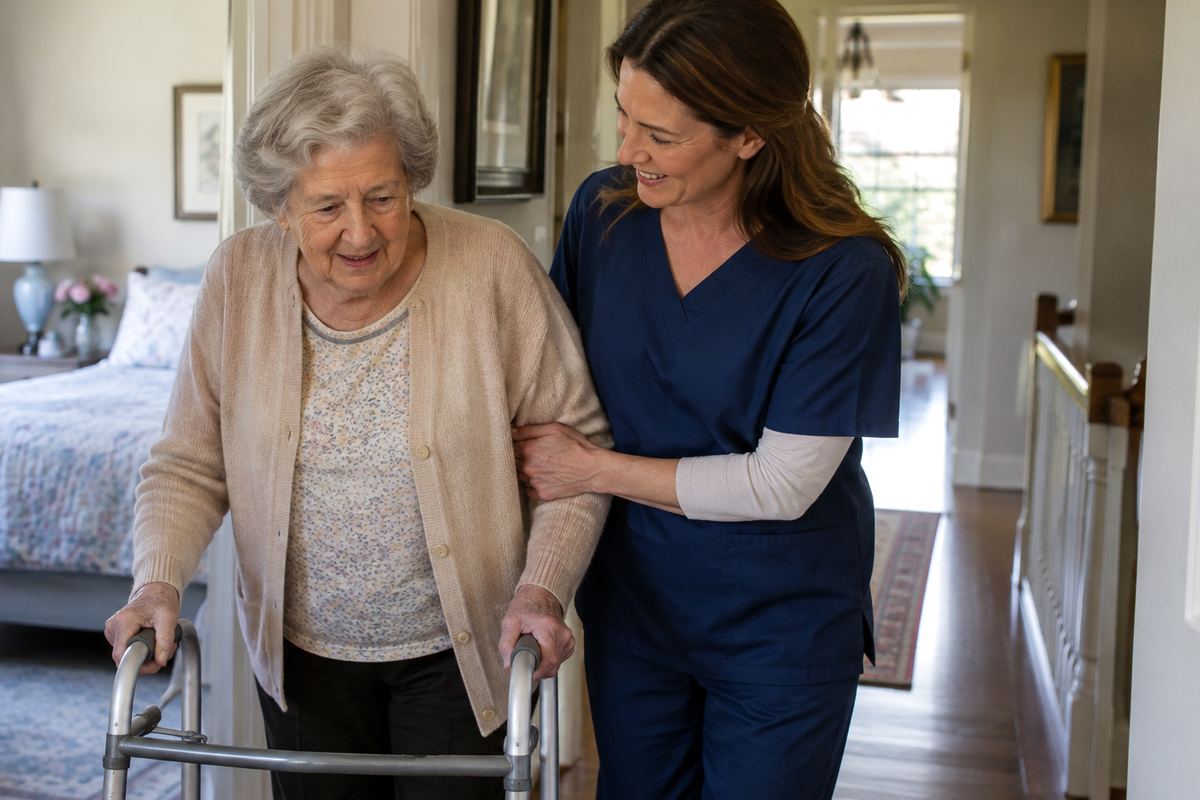
Personal care covers bathing, dressing, grooming, and help moving safely around the house. Families often turn to this level of support when a parent starts struggling with stairs, balance, or basic self-care tasks but still wants to remain in their own home rather than move to a facility.
Alzheimer's and Dementia Support Built on Patience
Memory loss changes what a family needs from a caregiver. Specialized dementia support focuses on calm redirection, consistent routines, and safety measures suited to the household, whether that means securing exits or simplifying the day into predictable, manageable steps.
Respite Visits That Give Family Caregivers Breathing Room
Many adult children living nearby are handling caregiving duties themselves, often while working or raising their own kids. Respite care brings in a trained caregiver for a few hours or a few days, giving the primary family caregiver time to rest, travel, or simply catch up on their own life.
Round-the-Clock Support for Growing Needs
When a parent can no longer safely be left alone, continuous or live-in caregivers provide ongoing support. This option works well for families managing advanced mobility limitations, late-stage dementia, or recovery periods that require someone present through the night as well as the day.
Post-Hospital Recovery Support at Home
After a hospital stay or surgery, many seniors need temporary extra help at home while they heal. A caregiver can assist with mobility, medication reminders, light meal prep, and monitoring for setbacks, reducing the chance of a return trip to the hospital.
What In-Home Care Costs in Orange and How Local Families Typically Pay
Cost is usually one of the first questions families ask, and understandably so. In this city, non-medical home care typically runs roughly $36 to $48 per hour, though the exact rate depends on the level of care, hours needed, and whether overnight or live-in support is involved.
With a median household income of $120,594 and 21,768 residents aged 65 and older, this community has a substantial population of families weighing these costs carefully. Most pay privately, but there are other resources worth exploring before assuming quality support is out of reach.
Paying Out of Pocket Is the Norm Here
Most households in this part of Orange County cover costs out of pocket, often combining savings, retirement income, or contributions from adult children. Paying privately also tends to offer the most flexibility in choosing hours, services, and how quickly support can start compared to other funding paths.
Old Policies Sometimes Still Pay Out
Families who purchased long-term care insurance years ago sometimes forget they have it. Many policies reimburse for services from a licensed agency, so it is worth pulling out that paperwork and checking the coverage details before ruling out this option.
Aid and Attendance Benefits for Military Families
Veterans and surviving spouses in this community may qualify for VA Aid and Attendance, a benefit that can help cover the cost of in-home caregiving. Eligibility depends on service history, medical need, and income, so it is worth a conversation with the VA or a benefits counselor.
Why Medicare Rarely Covers These Services
It is a common misconception that Medicare will cover ongoing non-medical support. In reality, Medicare generally does not pay for services like bathing assistance, companionship, or light housekeeping, which is why most families plan around private pay or insurance instead.

How to Tell a Home Care Provider Serving Orange Is Properly Licensed
Not every caregiving arrangement in California is held to the same standard. Before trusting anyone with your parent's wellbeing, it helps to understand how licensing actually works here.
California requires non-medical home care agencies to be licensed as a Home Care Organization, or HCO, by the California Department of Social Services, Home Care Services Bureau. Every caregiver the agency sends must also be a Registered Home Care Aide who has passed a background check and appears on the state's Home Care Aide Registry.
Confirm the Agency Holds an Active HCO License
Before hiring anyone, ask to see proof the agency is licensed as a Home Care Organization through the California Department of Social Services. This license means the provider has met state requirements for operating a caregiving business, not just hiring individual workers informally.
Check That Each Caregiver Is on the State Registry
Every caregiver sent into your home should be listed on the Home Care Aide Registry after passing a background check. This registry exists specifically to protect families, so do not hesitate to ask the provider how they confirm each caregiver's registry status before a placement.
Expect Straightforward Answers About Care Plans
A trustworthy provider should walk you through how care plans are built, updated, and communicated to your family. If answers feel vague or rushed, that is often a sign to keep looking rather than move forward with that particular agency.

How Home Care Helper Pairs Your Orange Family With the Right Local Provider
Searching through agency websites one by one is exhausting, especially while you are worried about a parent. Home Care Helper simplifies that process into a few short steps.
We are a free matching service, not an agency, and we do not employ caregivers. Our job is to understand your family's situation and connect you with one licensed agency already serving this area and the surrounding Orange County region.
Share Your Loved One's Situation With Us
Tell us what kind of support your loved one needs, whether that is companionship, personal care, dementia support, or round-the-clock help. A short conversation or online form gives us what we need to understand the situation in your household.
We Narrow Things Down to One Qualified Match
Using what you share, we narrow the search to one home care agency already licensed to operate locally and familiar with the surrounding area, from neighborhood layouts to nearby medical offices.
The Agency Takes Over Scheduling Directly With You
Once we make the introduction, the agency handles scheduling, caregiver matching, and care plan details directly with your family. You stay in control of every decision from that point forward.

Planning for Overnight and Live-In Support as an Orange Parent's Needs Deepen
Needs rarely stay the same for long. A parent who manages fine with a few hours of help a week may eventually need someone present overnight or around the clock, and planning ahead for that shift makes the transition smoother for everyone.
Families across Orange County often wait too long to start this conversation, usually because it feels overwhelming. Starting early gives you more time to compare options calmly instead of making a rushed decision during a crisis.
Watch for Early Warning Signs
Repeated falls, wandering, missed medications, or sudden weight loss are all signals that part-time help may no longer be enough. Noticing these signs early allows a local family to transition into live-in or around-the-clock arrangements on their own timeline rather than reacting after an emergency.
Weighing Live-In Help Against Hourly Shifts
Live-in caregivers stay in the home and provide support throughout the day and night, often at a different cost structure than hourly overnight shifts. For many households here, this option offers steady companionship and supervision while keeping a parent in familiar surroundings.
Tapping Into the Orange County Office on Aging
The Orange County Office on Aging, the county's Area Agency on Aging, offers free information and referral services along with caregiver resources that can help families understand what additional local support exists as needs grow beyond basic in-home assistance.
Supporting an Orange Parent Through Memory Loss and Dementia
A dementia diagnosis changes the shape of caregiving almost overnight. Families here often describe feeling unprepared for how much patience, structure, and specialized knowledge the condition requires.
Support built around memory loss looks different from standard caregiving. It focuses on reducing confusion, maintaining safety, and preserving dignity even as communication and memory become more difficult.
Keeping Routines Familiar Eases Confusion
A predictable daily schedule, consistent caregiver, and familiar surroundings all help reduce agitation for someone with dementia. In this city, where many seniors have lived in the same home for decades, keeping that environment stable often matters more than any single intervention.
Spotting Hazards Before They Cause Harm
Dementia increases the risk of wandering, falls, and missed medications. A caregiver trained in memory support can help identify safety gaps around the house, from unsecured doors to cluttered walkways, and adjust the environment before a problem occurs.
Keeping the Family Informed Along the Way
Dementia care is not just about the person diagnosed. Adult children nearby often carry significant emotional weight watching a parent change. A good caregiver works alongside the family, offering updates and reassurance rather than taking over without communication.
Home Care Reaching Orange and Nearby Orange County Communities
Home Care Helper connects families throughout Orange and the surrounding Orange County area, including Anaheim, Santa Ana, and Irvine. Wherever your loved one lives, we work to match your family with one licensed local agency familiar with that part of California.
Home Care Available Across Orange, CA ZIP Codes
Home Care Options in Cities Near Orange
Frequently Asked Questions About Finding Home Care in Orange
How quickly can a home care agency in Orange start services?
Many licensed agencies serving this city can begin care within a few days of an initial assessment, and sometimes sooner for urgent situations. Timing depends on caregiver availability and the specific type of support your family needs.
Is Home Care Helper itself a home care agency in Orange?
No. Home Care Helper is a free matching service. We do not employ caregivers or provide care directly. Instead, we connect your family with one licensed agency already serving the area and surrounding Orange County.
What does home care typically cost per hour in Orange, CA?
Rates here typically range from roughly $36 to $48 per hour, depending on the level of care needed, hours scheduled, and whether overnight or live-in support is involved.
How do I know a home care agency near Orange is actually licensed?
California requires non-medical home care providers to hold a Home Care Organization license from the California Department of Social Services, Home Care Services Bureau. You can also confirm individual caregivers appear on the state's Home Care Aide Registry.
Does Medicare pay for home care services in Orange?
Generally, no. Medicare does not cover ongoing non-medical caregiving such as companionship, bathing assistance, or light housekeeping. Most families in this area rely on private pay, long-term care insurance, or VA benefits instead.
Can veterans get help paying for in-home care in Orange?
Veterans and surviving spouses may qualify for VA Aid and Attendance, a benefit that can help offset the cost of in-home caregiving. Eligibility depends on service history and medical need.
What is the difference between companion care and personal care for Orange families?
Companion care focuses on conversation, activities, and reducing isolation, while personal care includes hands-on help with bathing, dressing, and mobility. Many families start with companionship and add personal care as needs increase.
Where can Orange County residents find additional senior resources besides home care?
The Orange County Office on Aging, the county's Area Agency on Aging, offers free information and referral services, caregiver resources, and senior services across the county beyond what a single agency typically provides.
Let Us Help You Find Home Care in Orange Today
You do not have to sort through every home care option in Orange on your own. Tell us what your family needs, and we will connect you with one licensed local agency ready to help, at no cost to you.
Takes about 60 seconds. One local agency reaches out, not a call center.